Breast is best. Breastmilk is the perfectly-designed nourishment for babies. Breastmilk is free, and formula is costly. Nature gave us this gift. All of these sayings are fine and good and not entirely untrue, but as someone who has spent most of the past 11 years either pregnant or nursing a baby (and occasionally both at the same time!), I am painfully aware that breastfeeding doesn’t always work—and that hearing such platitudes while failing to successfully breastfeed just adds to the frustration. When my first child was born, I couldn’t imagine not breastfeeding. It wasn’t an option. I had no idea that she could have other plans.
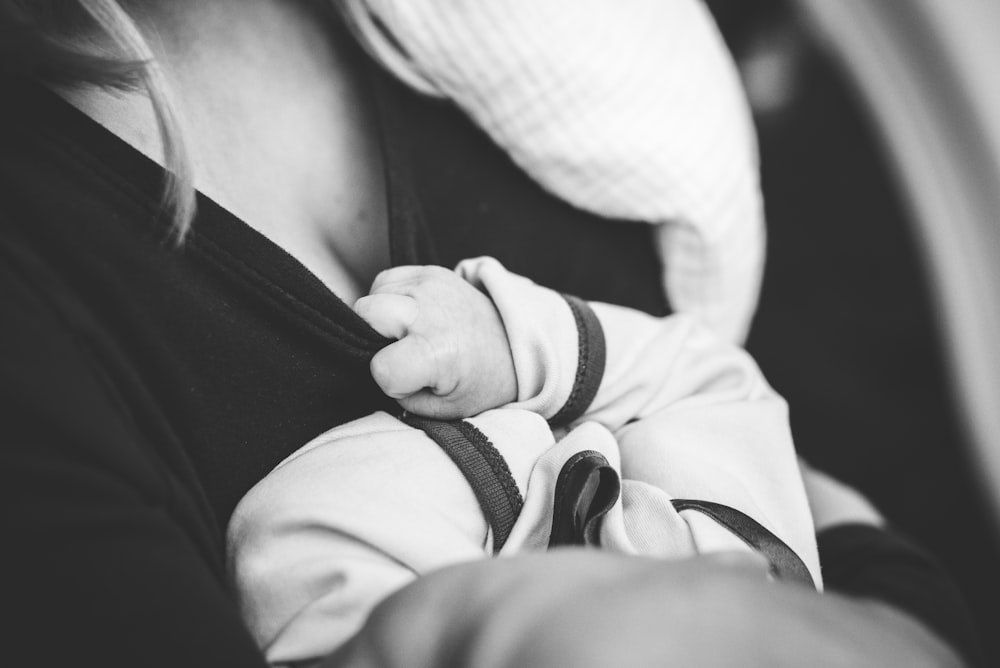
Everything about my daughter’s arrival was perfect: I went into labor while watching Sunday night television, not two hours after mailing the last of my baby shower thank yous. My contractions progressed quickly, and when I arrived at the hospital, I immediately received an epidural. Six hours later, my baby girl was here—six and a half pounds of perfection with a shock of auburn hair. I had been hearing horror stories about first baby labors, but my worries had been unfounded.
I was ready to nurse as soon as the doctor handed her to me. I had grown up around women breastfeeding, and then my own older sisters’ breastfeeding, so I had seen enough of it to know the basic mechanics. But when I offered my breast to my newborn, she was completely uninterested. The nurse assured me that she was most likely tired and that there would be plenty of time for feeding.
But a few hours later, when we tried again, my baby girl seemed confused and frustrated. She rooted around, made some small snorting noises, but eventually flopped her head away and cried. I wanted to join her.
The nurses tried to be helpful, showing me how to squish my breast and make it more accessible to my daughter, but it wasn’t working. My milk had come in strongly and quickly, and my breasts were now heavy rocks in need of emptying. So, while my husband held our sleeping baby, still uninterested in food, I attached a funnel to my breast and turned on the whirring suction of an industrial-grade breast pump. While the relief from engorgement was welcome, the pinching and pulling of the machine was excruciating. I dutifully slathered each nipple with lanolin, but it didn’t fully protect me from the pain.
Milk in hand, and with he lactation consultant unavailable until the next day, the nurse suggested feeding my daughter with a small medicine cup. I thought she was out of her mind, and as I watched her prop up my brand-new baby and try to coax her into taking sips from a cup, I cried. I was supposed to feed my baby. This was my one job, and I couldn’t do it.
Eventually, the nurses sent my husband to the store for a nipple shield, and between that and bottles of pumped milk, the baby ate fully. We were discharged, now a family of three, with the instructions to follow up soon with our pediatrician’s office.
Once we arrived home, I continued the exhausting routine of sterilizing each piece of bottle, breast pump, and nipple shield, pumping and feeding my baby before offering her the breast. If she didn’t get a bottle first, she became too frustrated to nurse, which made us both upset. Instead of sleepily nursing in the middle of the night, I had to get up, pump, feed her the bottle, then offer her the breast, only to turn around and do it again two hours later. By the time I had made it through the entire ritual, it was almost time to begin again. The lack of sleep and ability to recover made me keenly aware of my failure to do what I had assumed was instinctual.
Eventually, we had some success with the shield after seeing a lactation consultant—if only for a few minutes, I was nursing my baby successfully!—but on the drive home, I started to sweat profusely. It was only March, but I begged my husband to turn on the air conditioning. By the time we arrived back home, I was shivering uncontrollably and crying: I had a fever caused by mastitis, a breast infection. According to my doctor, I was more likely to contract mastitis because of the pumping. After a round of antibiotics and some leftover pain medication at my doctor’s suggestion, I was back to normal.
Still, I kept getting mastitis. The fevers always came on suddenly—once, at a shopping mall, another time at my sister’s house, another while we were out for lunch with friends.
The eighth time I contracted mastitis was the most severe. My baby was three months old, and we were attending my students’ eighth-grade graduation. All of the sudden, I felt the fever wash over me. I was instantly nauseated and had to rush out of the auditorium to vomit in the closest trash can. One of my colleagues ended up driving me to the emergency room, and when my husband arrived, I told him that was the end. I had to be done for the sake of my sanity. I wept because I knew there was nothing left to try, and while I knew that our baby was happy and healthy, I mourned the loss of this bond. I started to step down the pumping, got mastitis one last time, and after a week, my breasts were dry.
Formula is a wonderful and life-saving invention, but I found myself extremely defensive about feeding it to my baby. Sometimes, people would comment on the bottles, asking why I wasn’t nursing her, and every time that happened, the feelings of failure were renewed. Although I owed no one an explanation, I found myself nervously explaining the intimate details of my nursing experience, sometimes to perfect strangers. My doctor noticed how terrible I felt and suggested that my inability to nurse may have exacerbated the baby blues, and she prescribed Zoloft to help me cope.
My daughter is now thirteen years old and continues to be a healthy and happy child. When her brother was born two years after her, and six weeks early at that, he latched immediately and stayed there, as did her three sisters. I don’t know why my firstborn and I didn’t get the hang of breastfeeding. Perhaps she had a tongue tie, or maybe if I had been better prepared, I would have handled it differently. But while my inability to nurse her was extremely difficult, I am grateful to have gained the empathy I have for those who can’t nurse or choose not to nurse their babies. Nothing about parenting is easy, but no matter how you feed your baby, what matters is that they are fed.
Like this piece? Subscribe to our monthly newsletter for real stories about women on their journey to motherhood