How UI taught me to self-advocate


I lingered at an outdoor cafe in Istanbul, spooning a dish of honeyed custard. The reddening sun hung low, and the evening felt perfect. But something was off. And I wasn’t the only one who noticed.


A friend turned to me. “You’ve been disappearing a lot,” she said. “Is everything OK?”


Well… it wasn’t, really. I bolted from the table mid-sentence. Darting inside for the ninth time that night, I collided with a waiter in my frantic sprint to pee.


Things only got worse when I flew home to New York a few days later. One night, after a boozy dinner near Central Park, I nodded off while my subway crawled back to Brooklyn. In total horror, I awoke to a dampened plastic seat. I plopped my purse on my lap and slunk out into the shadows as soon as my stop came.


How had I suddenly lost control of my bladder?


When I was a kid, my family had nicknamed me “the camel.” I prided myself on my stoicism between bathroom breaks, my ability to endure long car rides sans complaint.


Fast-forward to adulthood. That fateful summer, with no real warning, my body did a 180. Surely, I couldn’t end up in diapers while still in my 20s!


Freaked out and hoping for answers, I booked a consultation with a urologist. He spent our appointment solemnly doodling a diagram of a bladder on a scrap of paper. I left the appointment none the wiser about my condition. But I went home armed with antidiuretic drugs. When I asked how long I would need to take them, the doctor mused, “Forever, I suppose.”


The pills were expensive and nausea-inducing. Worse yet, they didn’t work. We scheduled an ultrasound. Lying back, cold jelly squelching onto my groin, I was surprised to learn that the grainy image showed two kidney stones.


The urologist mapped out a game plan. A ureteral stent would be inserted inside me for a month, then a second procedure would zap the stones. No one knew if this would mitigate my urinary issues, but it was the next level in a long game of trial and error.


The stent—a long, pronged hose—felt like metal claws scratching at my bladder. Days before my second surgery, I began shaking uncontrollably, flushed with a blazing fever. In a daze, I took a taxi to the ER, expecting to be sent home. Instead, I was rushed to the ICU with sepsis. My big-hearted nurse clucked at me as I lay wanly, strung up to IVs. “You need to learn how to self-advocate,” she said, recognizing that something had gone awry in my medical treatment for a preventable infection to have spread to my blood.


It took months of recovery, but that nurse was right. When I finally found relief, it was on my own terms.


Like a detective pulling at the threads of a case, I researched bacteria with links to incontinence and had my urine re-cultured for pathogens. Sure enough, my incontinence had a bacterial cause, but I persevered until I found the right treatment plan. It was a long shot, but the urinary problems cleared up once I found the right antibiotic.


Losing control of my bladder was one of the most disempowering periods of my life. Thankfully, for me, it was only temporary, but five years later, it’s taught me lasting lessons about when to call my own shots when it comes to my body.


For now, I’m going to relish every sunset dinner, which is now a pleasure again—not an anxiety trigger. And the only time I get up from the table is to flag the waiter down for another dessert.


Like this piece? Subscribe to our monthly newsletter for real stories about women on their journey to motherhood

Let’s get physical


After years of dealing with insecurities when it comes to UI and intercourse (and just doing it anyway, despite my own discomfort, which I do not recommend!), returning to sex felt better than I expected.


Things were heating up, and I remember hesitating: Would this hurt? Painful intercourse was one of the issues that had sent me to pelvic floor therapy in the first place. Would this send me back? Could I potentially undo all of the progress I had made? Would it be worth it?


As my clothes came off, I felt my concerns melt away. I abstained on purpose for a while for a handful of reasons. Pelvic floor therapy sessions, while helpful, can still be very painful. So, adding a potential trigger to my still-healing vagina wasn’t something I was willing to entertain. Also, if I am being completely honest, I really didn’t have any desire for sex—or feel all that desirable. Given the choice between root canal or sex, I am all too often ready to head to the dentist.


But back to the bedroom. It turned out that not only did sex not hurt (hooray!), but I also didn’t experience any UI symptoms at all!


In this, pelvic floor therapy has been a game-changer for me and my UI. By working out my issues with my therapist, I learned a lot about how to enjoy sex while living with UI, too.


For one, I’ve learned that sex can’t be something I take lying down. Positioning is everything, which was the key to helping me feel more in control of my pelvic floor. Also, I learned stretches to do in order to relax my pelvic floor, making things less tense down there, which reduces my chances of having any pain or discomfort when things get rockin’. Now, by knowing my body’s inner workings as well as I do and being cognizant of what my body needs in order to enjoy life, and not just endure it, I am able to make sure that my pelvic floor issues do not stop me in the heat of the moment. I even told my therapist about it the next day, celebrating how far I’d come.


I recognize I’m one of the lucky ones. A friend, who was recently diagnosed with UI after the birth of her daughter, reached out and said she had been experiencing leaks during orgasm. When she told her partner about it, he chuckled, suggesting that they could have sex on one of their new dog’s puppy pads. She laughed it off, but was secretly mortified. Laughter can be the best medicine, but sometimes it can be pretty painful when it comes to UI.


So when she called me for advice, we both knew there had to be something else she could do besides use canine housebreaking devices to control her UI symptoms during sex. I was glad to be able to tell her about my own breakthroughs.


In fact, studies have found that many women with incontinence report the same amount of sexual activity as women without incontinence, and that they enjoy the sex just as much. It just might take a little bit of extra effort to regain our confidence and control.


In my case, from always choosing certain preferable positions (get on top, ladies!) to regular Kegel training, I was able to find my way back to intimacy despite the bumpy road. I still have my own issues to overcome, but it’s easier to do so if I remember to be patient and give myself grace. I even make sure to utilize all of those yoga positions that have been recommended to me to open up my pelvic floor. All of these steps allow me to remain open to the idea of sex, which is half the battle when dealing with pelvic floor issues, such as UI.


It’s these small victories that we can celebrate, overcoming any roadblocks that UI may throw at us on our path through life. UI may make life hard sometimes, and it may make sex a little less comfortable at times, but there’s no reason for it to derail life’s pleasures. Intimacy is important, and I’m happy I was able to learn that there are ways I can still enjoy it without worrying so much. I learned to listen to my body and be open about my concerns.


Having a partner who is understanding and patient can make all the difference, which is why I always urge my friends to open up to their partners as well. It is important to have all parties on board when clothes start coming off, and in order to alleviate any potential embarrassment, I have found it important to communicate about these issues. A simple, “So, this happened last time, and I’d like to find a way to make it not happen again” can go a long way in the bedroom. It doesn’t matter whose bed you end up in; just make sure to communicate and have full support of those you choose to have sex with. And let’s leave the puppy pads for the dogs.


Like this piece? Subscribe to our monthly newsletter for real stories about women on their journey to motherhood.

5 UTI prevention tips



In 2014, I had eight UTIs. I’ve always been prone to them, but this was a new record.

The cause of my UTIs was fairly obvious; they’d usually come on an hour or a few days after sex. That year, cuddling became out of the question, as I was sprinting to the bathroom to squeeze out even the tiniest bit of urine to try to prevent them.

Not that my story is unusual: UTIs are the second most common infection in the United States, impacting millions of women like me. They’ve also been shown to share links with UI.

Are UI and UTIs related?

Urinary incontinence (UI) and UTIs share some symptoms. For instance, it’s common to feel the frequent urge to urinate when you have a UTI, and sometimes you might even experience leakage. So if you’re having frequent urges or leaks along with any common UTI symptoms like burning and pain, you likely have a UTI. But if you’re experience leakage without the other symptoms, you might be experiencing plain old UI. It’s important to treat each one accordingly, though, and not simply assume you have a UTI, so pay attention to the signals your body is sending you!

UI and UTIs could be related in other ways too. For instance, some studies have shown that women who have frequent UTIs are more likely to experience UI—both during the times they have UTIs and during those that they don’t. It’s not entirely clear why that is, but one in three women experience UI at some point in their lives, so if you fall into the frequent UTI camp, you’re definitely not alone.

And don’t be afraid of a little leakage when you have a UTI, either! There are tons of awesome products out there for leaks of any size, so definitely stash a box of UI liners in your cabinet to make dealing with your next UTI a little bit easier.
What can you do to prevent UTIs?

Despite the prevalence of UTIs, prevention options have not been up to snuff. My own prevention pursuit led me down dead-end, antibiotic-filled paths (with tired, useless cranberry products at every turn).

Below I’ve outlined the habits that are key to avoiding UTIs day in and day out.

1. Treat your water bottle like your phone—don’t leave your house without it

Fluid helps move things through the urinary tract, but it also dilutes the urine so bacteria can’t grow, so get serious about staying hydrated.

2. Wipe from front to back

E. coli is responsible for 90 percent of UTIs. Wiping from front to back instead of back to front ensures that you aren’t helping harmful bacteria to migrate from your rectum to your urinary tract.

3. Urinate after sex

Try your best to urinate after sex, which will help flush out any bacteria that may have migrated from the vagina to the urethra during sex.

4. Let her breathe!

Wet bathing suits, tight pants, sweaty gym clothes—and yes, urine—trap moisture that harbors bacteria. Changing to stay dry can make a big difference.

5. Avoid holding your pee for prolonged amounts of time

The UI crowd might laugh at this one, but holding your urine for a long time allows bacteria to multiply in the urinary tract, resulting in a bladder infection or UTI. Don’t wait until it’s an emergency.

Sometimes UTIs can still be out of your control, the result of hormonal changes, anatomy, pregnancy, conditions like diabetes, or yes, UI.

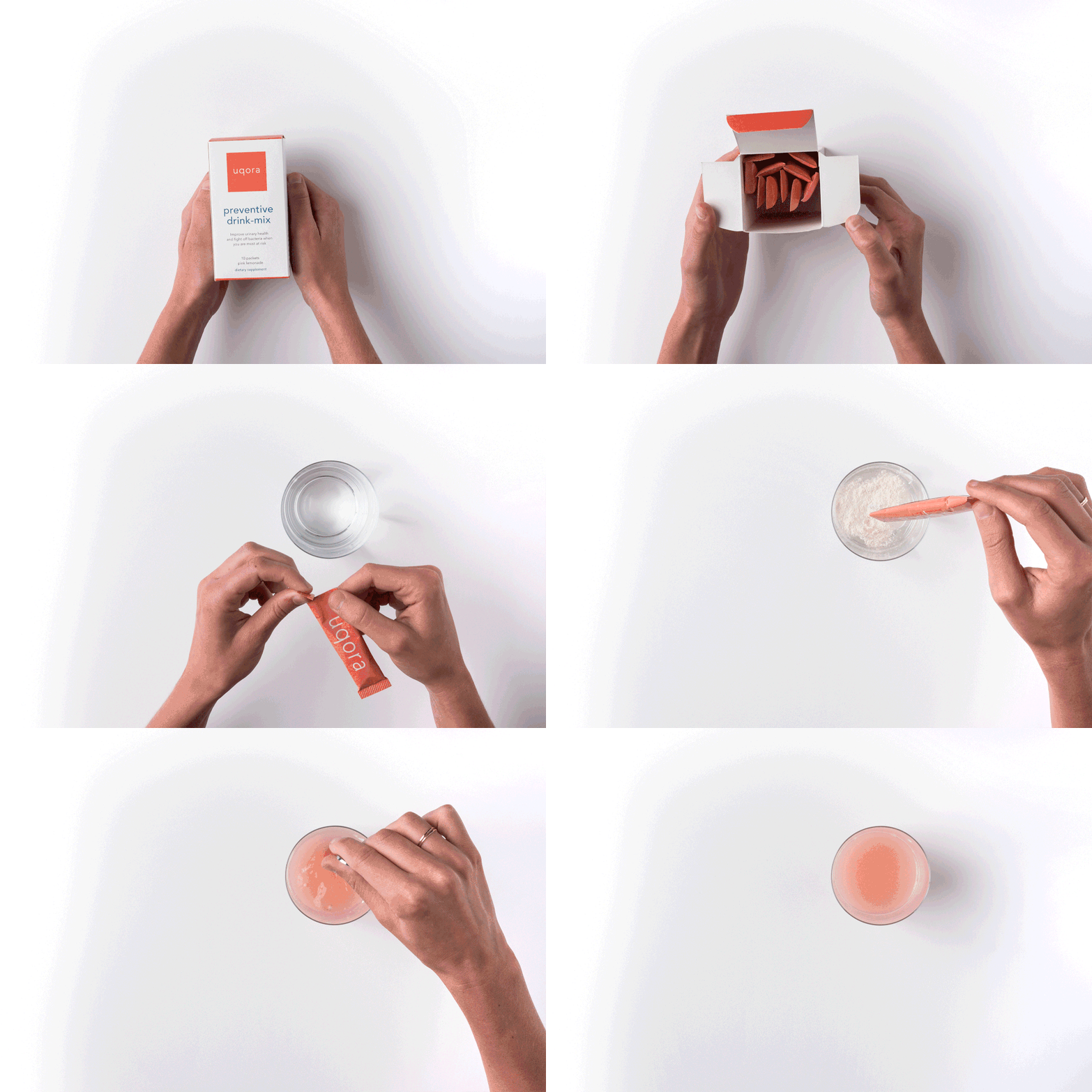
After my UTI apocalypse, I teamed up with top urologists and physicians to develop Uqora—a pink lemonade with a purpose. It flushes UTI-causing bacteria after sex, exercise, or every day.

Uqora works in three key ways:

Prevents bacteria from sticking to your urinary tract in the first place, stopping an infection from taking root.

Stimulates urine production so you don’t have to wait 20 minutes to do your post-sex duty.

Helps your body fend off infections with vitamins and electrolytes.

So if you’re in that camp that just can’t seem to kick your UTIs no matter what you do, you might want to check out www.uqora.com.


For 10% off your order of Uqora products, use the code JUNO10


My postpartum darkness


Those early weeks and months after giving birth are hard on you. Pregnancy and childbirth turn your body into a completely foreign place. Things about your body you took for granted suddenly become unpredictable. Even your ability to control your bladder.

You assume that after you give birth, some familiarity will return, but often, it doesn’t. At least not right away. When you first come home after your vaginal delivery, you might expect a little bit of leakage, but you might be shocked at how much you have to retrain yourself—and how little it’s like “riding a bicycle.”

You’re stressed and inexplicably sad. You aren’t taking care of yourself as well as you should be because you are physically and emotionally drained. You don’t shower or shave or wash your hair. You are existing, hanging on by a thread, taking care of your baby but not yourself. And even after the swelling is gone, the episiotomy is healed, everything is back to normalish, even then, your body isn’t cooperating.
You pee when you walk, when you sneeze, when you bend over to pick up the baby. You never really know when it’s going to happen, so you go to the bathroom a zillion times a day. You’re afraid to leave the house without a pantyliner. You’re afraid you smell. You’re actually pretty sure you do smell: like pee and milk and desperation.


So you just stay home. You stay in and you worry about things you have no control over, things that don’t even exist in the real world, the world outside of your world. And still, months later, it’s not better. People joke about it—“Cross your legs when you sneeze!” “Better not laugh too hard!”—because it seems like everyone who’s given birth knows. But why are they all so chill about it? Why do they not cry? Why is it no big deal?


When you’re so far inside your head that nothing else even exists, you pretty much stop caring that you spend a week without a shower or three days in the same clothes, and you stop noticing that you leak urine every time you even think you need to go to the bathroom. It just becomes another bit of background to the maelstrom in your soul. After all, you’re already failing, so of course your body isn’t going to work again, of course you’ll never be normal again. Why would you? You aren’t the same as all those other moms who know what they’re doing. Obviously they’re doing something right and you’re doing something wrong.


You read an article that says that women with urinary incontinence are more likely to develop postpartum depression, but you don’t know you have PPD, you just think you’re a horrible mom with a failing body. So you don’t mention it to the doctor at your follow-up. You don’t mention it to anyone. You do Kegels and hope that one day it gets better.


Maybe you don’t get back to where you were, where you always just assumed you’d be, the place where your bladder cooperates and does its job, reliably, every time. Sometimes, it’s five years later and you still don’t have 100-percent control, but the fog of PPD has lifted, your kids are thriving, and you can finally laugh at the “cross your legs when you sneeze” jokes, because at least you know you aren’t alone.


Like this piece? Subscribe to our monthly newsletter for real stories about women on their journey to motherhood.

January Editor’s note


Happy New Year! January is the perfect month for making changes big or small, so this month we’re talking about not letting UI get in the way. It may always be present, but it doesn’t need to interfere with laughing, crying, jumping, running, spending time with friends or family, and everything else in your life.

Of course, that’s easier said than done. Every day, I hear women whisper about the changes, some subtle, some less so, they’ve made in order to deal with their incontinence. Some quit wearing tight clothes. Others, by degrees, stop going to the pool. Some practically dehydrate themselves. This is how we cope.

But this approach is also reductive, a winnowing of the very things that make life extraordinary—or even ordinary. Is it worth it? Maybe not. Instead, what if we embraced a reality that’s a little bit wetter but just as laughter filled?

That’s why this month, I’m proud to showcase the stories and struggles of women who haven’t let UI get in their way. At Motherfigure, we want to make UI easier to talk about, learn about, and control—so you can keep laughing, keep moving, and keep being you.

And this January, I’m resolving to be more positive, whatever life throws my way. I hope you’ll join me.

Chelsea


RECENT FEATURES

Leaks and bounds
I’m a runner, but running away from UI wasn’t the answer
CONTINUE READING • 2 MIN READ

Me, myself, and UI
I potty trained three daughters, but I was the one always running to the bathroom. Now I laugh about it.
CONTINUE READING • 3 MIN READ

When a pad just won’t do: Impressa
The commercial for the Poise Impressa promises I’ll laugh without leaks
CONTINUE READING • 2 MIN READ

How to train your bladder
Being proactive can actually help
CONTINUE READING • 4 MIN READ

Me, Myself, and UI


I was in my happy place—up against the rail at a rock concert. One of my favorite bands was minutes away from taking the stage. My insides thrummed with excitement. Anticipation coursed through me, and I felt a tingle from my head to my… oh no. I looked at my husband, who had seen that look in my eyes before. I grimaced as my eyes fell upon the sea of people I would need to get through to find relief, while hopefully not relieving myself along the way.


That night, I made it just barely. But other times, I am not so fortunate. Thanks to my friend urinary incontinence, I have spent more time in bathrooms than my three daughters did while potty training. I know where bathrooms are wherever I go, even if I am simply passing through. I have compared my life to a series of bathroom breaks spread out between everything else I have to do between waking and sleeping. It isn’t glamorous, but some days, it’s all I’ve got.


I’ve been diagnosed with two forms of UI: stress incontinence and overactive bladder. My stress incontinence comes from weakened pelvic floor muscles due to pregnancies and childbirth, which led to two instances of pelvic organ prolapse requiring surgical intervention, and a diagnosis of interstitial cystitis (IC). Overactive bladder is a symptom of IC and one of the symptoms that keeps me on my toes (and toilet) the most.

Twice as many women than men are diagnosed with UI, so I know this is not something I must deal with on my own. I have great medical insurance and a team of specialists and doctors who help me manage my symptoms and try to live my best life. But I keep hearing the same thing over and over again: “But you’re so young to be dealing with this,” because typically older women experience UI more often than younger women. However, at one month shy of turning 36, I know that UI doesn’t care how old I am.


There is no part of my life that is not affected by UI. From going out to dinner and drinks with friends to spending time with my kids and even intimacy with my husband, there is no time that I am not cognizant of my bladder. I know that urinary incontinence is pretty high up there on the list of Medical Issues No One Wants to Talk About, which is why I think we need to talk about it more. I feel no shame when I slide that pantyliner on in the morning, knowing that it will act as a barrier, allowing me to remain as confident as I possibly can be. I know I am doing all I can to keep living and loving the best way I know how—walking through this world, head held high, and not only because I’m trying to find the restroom.


Like this piece? Subscribe to our monthly newsletter for real stories about women on their journey to motherhood

Women’s incontinence 101


Being a woman can be awesome—but it can also really suck sometimes. One of those times is when it comes to urinary incontinence, which occurs at twice the rate in women as in men. And while we may think about incontinence as being exclusive to the realm of the elderly, the truth is that women’s incontinence affects about one in three of us—and that includes young women, too.

So whether you’re affected yourself, or you know other people who are, it’s worth reading up on women’s incontinence to understand this phenomenon a bit better. We hope this fact sheet bones you up on the basics, but click through some of the links for more detailed resources about women’s incontinence.

WHO is affected by women’s incontinence?

About 25 million adults in the United States have urinary incontinence, and about 80 percent of those are women. Between the ages of 18 and 44, about a quarter of women experience incontinence. There isn’t much information about racial or socioeconomic demographics (or influences, for that matter), but we do know that women’s incontinence occurs more often in women who are pregnant or have had children, are overweight, or are postmenopausal. One study found that major depression or a BMI over 30 was strongly correlated with UI in women.

WHAT is women’s incontinence, exactly?

Urinary incontinence is the involuntary leaking of urine; this includes both little dribbles, which might occur when you laugh or sneeze, and seriously uncontrollable gushes. There are two main types of urinary incontinence, both of which are very common in women.

The first, stress UI, occurs when pressure is placed on the bladder, and the muscles that hold the urethra shut aren’t strong enough to do their job. For instance, laughing, running, or lifting something heavy might create that pressure. The weight and position of a baby during pregnancy can also contribute to stress UI.

The second type of incontinence in women is called urge UI, and this occurs when there’s a miscommunication between the brain and the bladder. Normally, the bladder communicates to the brain that it needs to empty when it’s getting pretty full. In urge UI, it communicates this message far too often. So you often feel a very strong urge to pee when you don’t really need to—but sometimes the urge is so strong you don’t make it to a bathroom in time.

WHEN does women’s incontinence start? Does it end?

For many women, incontinence starts during pregnancy. Not only is there a whole new entity in the body pressing on the bladder, but hormones are loosening the pelvic floor muscles to prepare for childbirth. And while having more elastic muscles down there makes for a better birthing experience, it also means that those muscles aren’t always able to shut the urethra quite as tightly as they need to.

Women’s incontinence often extends into (or starts during) the postpartum period as well. Some women experience incontinence for a few months after giving birth, while for other women, the incontinence never really goes away.

Of course, some women also experience incontinence unrelated to pregnancy. Many women begin to see incontinence symptoms as they get older, especially around menopause, as the pelvic muscles naturally loosen. For others, there may be no obviously identifiable reason.

WHERE can I seek help for women’s incontinence?

It may sound obvious, but talk to your doctor! The truth is that many women don’t talk to their doctors about incontinence—maybe because it seems embarrassing or they don’t want to acknowledge that it’s a real problem. But trust us, your OB-GYN or your primary care doctor have seen plenty of women’s incontinence, and they certainly won’t judge you for it. And admitting it’s a problem out loud can be tough, but it can also be the thing that makes it easier to manage. In fact, they’ll probably bring up solutions that will have you more comfortable long-term.

A doctor will most likely talk you through exercises to strengthen your pelvic floor and ideally refer to you a pelvic floor therapist.

WHY is women’s incontinence so much more common than UI in men?

We can blame a lot of it on hormones and babies. Pregnancy is such a major contributor to women’s incontinence because it really stretches things out and places a lot of strain on the body. It’s by design, but often, the body isn’t quite the same afterward. And female hormones that are necessary for the body to do its job—whether in pregnancy or in menopause—have the unfortunate side effect of loosening the very muscles we need to keep incontinence in check. The body contains multitudes! What’s more, differences in the shape and arrangement of the pelvic region and urinary tract make women more susceptible to UTIs and stressors that contribute to incontinence.

HOW can I deal with women’s incontinence if it happens to me?

First, know that you’re not alone! Remember that one in three women are dealing with the same thing, so don’t be ashamed to talk about it! Next, learn about women’s incontinence. Read up on the causes and treatment options, so you’ll know what to expect and feel empowered to take matters into your own hands. And talk to a doctor about women’s incontinence (you’ll feel so relieved when you do!).

Finally, there are tons of great products out there specially designed to help with women’s incontinence. From incontinence pads and liners (which are slightly different than period pads and do a better job with urine) to leak-proof underwear to tampon-like bladder supports, there’s plenty to choose from to help keep you feeling fresh and confident as you go about your day-to-day. Find what works for you; there’s no reason to let a little incontinence stop you from living your best life!

Like this piece? Subscribe to our monthly newsletter for real stories from real women living with UI every day


Like this piece? Subscribe to our monthly newsletter for real stories from real women living with UI every day

How to train your bladder


One of the hallmarks of urinary incontinence is the overwhelming urge to pee throughout the day. This occurs primarily with urge incontinence, which is one of the two main types of UI (the other is stress incontinence). Under normal circumstances, your bladder communicates to the brain when it’s full, which makes you feel the urge, which signals that you should go to the bathroom. For those of us who have urge incontinence, however, there’s a bit of a miscommunication. The bladder tells the brain it’s full—even when it’s not. Then the bladder tries to empty—and sometimes that happens when there’s not a bathroom in sight (or else way too suddenly to get to one).


Of course, there are many solutions and products out there to make sure these leaks aren’t too disruptive when they do happen, but one of the easiest and most effective things you can do long-term is train your bladder. In other words, you can follow a few simple steps to train your bladder to empty on a schedule, eventually reaching longer and longer intervals that allow you to keep living the carefree life you deserve.

How to train your bladder in five easy steps


1) Start a bladder diary

First thing’s first: If you want to train your bladder, you need to start at a baseline. For a couple of days, keep a bladder diary, in which you write down when you pee (or leak), how much, and what you drink throughout the day. This should help you figure out more or less how often you pee. You can download a bladder diary here.

2) Make a schedule…
After you’ve figured out how often you empty your bladder by using your bladder diary, you’re ready to move on to step two of training your bladder. Add 15 minutes to however often you determined that you pee. So, for instance, if your bladder diary indicates that you go to the bathroom every hour, set an interval for yourself of one hour and 15 minutes.

3) …and stick to it

Now comes the hard part. Pee first thing when you wake up in the morning, and then every hour and 15 minutes (or whatever your predetermined interval may be) until bedtime. Use a stopwatch or set the alarm on your phone to make sure you stick to the schedule in order to be sure you train your bladder properly. The important thing here is to go to the bathroom even if you don’t feel like you need to. This trains your bladder to operate on a schedule, which is important when you start lengthening the intervals.

4) Wait five minutes

Now comes the even harder part. If you feel the urge to go when it’s not your scheduled time to pee, make yourself wait five minutes. Count backward from 100 or do something else to distract yourself. The point here is to emphasize mind over matter; you’re training your bladder to listen to you, not the other way around. If after five minutes the urge hasn’t subsided, it’s okay to go to the bathroom. But then continue sticking with your schedule.

5) Prolong your intervals to keep training your bladder

After a week or two, when you’ve become a pro at peeing every 75 minutes (or whatever your case may be), and you’re doing it naturally without extra urges, add 15 minutes to your intervals. Now, you’re peeing every hour and a half to train your bladder to wait longer. Once you master that, add another 15 minutes, and another. The goal is to eventually pee about every three hours. If you successfully reach that point, consider your bladder trained!


What to expect after you train your bladder


For some women, it takes several weeks or even a few months to train their bladder completely. But the reason it works is because training your bladder tells your body that you’re in charge. And getting into a regular routine lets your bladder (and your mind) understand that a bathroom break is coming—so there’s no need to leak.

Of course, training your bladder might not cure your urge incontinence entirely, and if you have mixed UI (a combination of urge and stress), other interventions might be necessary, too. It’s always a good idea to talk to your primary care doctor or OB-GYN. But no matter what your doctor recommends, training your bladder is always a great place to start, and a good practice to maintain.


Like this piece? Subscribe to our monthly newsletter for real stories about women on their journey to motherhood.

Understanding pregnancy incontinence


There’s a lot going on in your body during pregnancy, what with hormones adapting to the change, new sensations you might not be used to, and your organs moving to accommodate an entire new human. The body is amazing… but it can also be pretty annoying, especially when it comes to dealing with pregnancy incontinence, or urine leaks you can’t control. Pregnancy incontinence is pretty normal (a side effect, we guess, of a new human pushing up against your bladder), but it affects women differently and at different times.


What is pregnancy incontinence?


To understand why pregnancy incontinence happens, it’s helpful to understand how the bladder works. Basically, the bladder sits right above your pelvic bones and fills with urine throughout the day. When it’s getting full, you feel an urge to pee. The urethra is connected to your bladder and surrounded by muscles that keep it closed; when you need to pee, those muscles relax and the urethra opens, letting the urine flow from the bladder.


Pregnancy alters this pelvic status quo, which can lead to pregnancy incontinence. You might experience stress incontinence, meaning you experience leaks every time you sneeze, laugh, or exercise. You might also feel the need to pee so often and so strongly that you can’t make it to a bathroom in time. Pregnancy incontinence can occur for a number of reasons:


  • Pressure: As your baby grows, it places extra pressure on your bladder. Simple movements like walking, running, or sneezing can also put pressure on it, making it more likely to empty.
  • Weight: Gaining more weight than recommended during pregnancy can also lead to pregnancy incontinence because—again—it places extra pressure on the bladder.
  • Hormones: Pregnancy hormones make joints and tissues more elastic to prepare for delivery, but this in turn also weakens muscles supporting the bladder and urethra.


How common is pregnancy incontinence?


Pregnancy incontinence is actually really common. About 25–45 percent of all women suffer from bladder leaks, and one study found that 63 percent of these women started experiencing it during pregnancy. So if that’s you, you’re definitely not alone.


How can pregnancy incontinence be managed?

There are a number of proven ways to help you deal with pregnancy incontinence.

  • Do Kegel exercises. Kegels are one of the best ways to manage pregnancy incontinence long-term. We recommend doing at least three sets of 10 Kegels every day—and you should see (or feel) results in a few weeks. Try holding each Kegel for 10 seconds. If you’ve never done Kegels before, next time you go the bathroom, try stopping your stream of urine. That muscle contraction is the same as what you do in a Kegel exercise. These can be done anywhere: while driving, at work, while watching TV… you get the idea.
  • Schedule your pee breaks. There’s no getting around the fact that the extra pressure on your bladder makes you want to pee way more often. But it might take a while to get used to—and at times when it would take a while for you to get to the restroom. Doctors recommend making sure to go to the bathroom every 30 minutes. Then, increase this time to an hour, then 90 minutes, then eventually two hours. You’re essentially training your bladder by emptying it regularly, making it easier to preempt the urge. You can also keep a log of every time you pee and every time you experience a leak; if you notice patterns, schedule your bathroom breaks accordingly.
  • Try pads and liners. There are plenty of great products out there that can help you feel dry and fresh, from thin liners for occasional leaks, to highly absorbent overnight pads, to discreet absorbent underwear. Just keep in mind that, although they look similar, incontinence products differ from period products in pretty significant ways. Because urine and blood have different viscosities and chemical makeups, they need pads that are specifically designed for the right purpose.
  • Eat fiber and drink water. Eating a fiber-rich diet helps manage pregnancy incontinence by keeping your digestive tract moving and avoiding constipation, which also places unnecessary pressure on the bladder. And although it might seem intuitive to drink less water if you’re peeing too much, the last thing you should do is dehydrate yourself. Eight glasses a day are still recommended for pregnant women to avoid dehydration and UTIs.


Does pregnancy incontinence go away?


This is the big question. For many women, yes, pregnancy incontinence goes away in the first few weeks after the baby is born. For other women, though, pregnancy incontinence lasts long after pregnancy—sometimes months or years. Pregnancy and vaginal birth can stretch and strain the pelvic muscles in ways that weaken them long-term. So doing Kegels during and after pregnancy can help manage the issue, as can being proactive about finding the right products that keep you feeling comfortable and confident.


Like this piece? Subscribe to our monthly newsletter for real stories about women on their journey to motherhood.

Got pregnancy bladder control issues?


When you’re pregnant, it’s often a whirlwind of excitement, exhaustion, soreness, concern about your diet, and running mental lists of everything that needs to get done before the baby comes. But one day you laugh, and you feel a trickle of pee down your leg. Or you realize you didn’t make it to the bathroom in time even though you’ve never had bladder control problems before you got pregnant. So what’s going on?

Turns out that pregnancy bladder control issues are really common—one of those less pleasant, under-the-radar side effects of pregnancy that fewer people talk about. In fact, about half of women experience pregnancy bladder control problems—and it’s no wonder! Your organs suddenly have to share their space and get shifted around to accommodate the baby growing inside you. The baby puts some pressure on your bladder, making you pee more than you’re used to or making the bladder more sensitive to stress.

Technically, these pregnancy bladder control problems are referred to as urinary incontinence, which can be subdivided into stress incontinence and urge incontinence and sometimes occurs as a mix of both. Briefly, urinary incontinence occurs when the muscles of the pelvic floor, which keep the urethra closed, weaken or get stretched out, which is common in pregnancy. In stress incontinence, small physical stressors, such as coughing, laughing, or lifting things, can cause the bladder to open a bit. Because the muscles aren’t keeping the urethra shut as they should, you might experience a trickle. With urge incontinence, pressure on the bladder (for instance from the baby!) might make you feel sudden, frequent urges to pee, even when your bladder isn’t full. Sometimes these come on so quickly that making it to the bathroom isn’t really an option. And pregnancy bladder control issues can come in either form.

In many women, pregnancy bladder control problems go away after the baby is born, sometimes in a matter of weeks or months. For other women, urinary incontinence persists to some degree. Whether or not your pregnancy bladder control issues will subside depends on a number of factors, including how your baby is delivered, its size, your weight, whether or not you smoke, and your genetic predisposition. In other words, it’s hard to say whether your incontinence will go away postpartum, but you should certainly talk to your OB-GYN about it. A doctor can give you specific insight into what kind of incontinence you’re experiencing and what solutions are best for you while it lasts.

The good news is that there are a lot of products out there designed specifically for pee leaks that can do wonders for managing your pregnancy bladder control symptoms. From light liners for mild drips to super-absorbent pads for nighttime to discreet underwear that can absorb a day’s worth of leaks, there’s something out there that is bound to work for you. Be careful, though, when trying out any bladder control solutions taken orally or inserted into the body. Poise Impressa bladder supports, for instance, which are inserted into the vagina to squeeze the urethra shut, are not recommended for pregnant women. Neither are bladder control pills and supplements like AZO Bladder Control. If you’re considering using a solution that goes anywhere but in your underwear, talk to your doctor first to make sure you’re using it safely.

Many women experiencing urinary incontinence respond by drinking less water. And while that may seem like a natural reaction, it doesn’t actually help and can lead to its own problems, including dehydration. In particular, it’s especially important to stay hydrated in the third trimester—right around the time that baby’s starting to press on the bladder—to avoid preterm labor, which can be triggered by dehydration.

Of all the things to surrender control of during pregnancy, you might not have expected it to be your bladder. But just remember that you’re not alone. Essentially one in two pregnant women you encounter share your experience—so we encourage you to talk about it! Swap stories, laugh about it, trade recommendations for liners and pads. If we’re all going through this together, we might as well make it easier on ourselves.


Like this piece? Subscribe to our monthly newsletter for real stories about women on their journey to motherhood.