The best breastfeeding positions for mom and baby


It can take some time to get into the groove of breastfeeding—especially when it comes to finding a position comfortable enough to feed for hours on end and ensuring a good latch.  In fact, the right position can have a huge impact on developing a positive breastfeeding relationship. 


As KellyMom, one of our favorite resources on breastfeeding, notes, above anything else it’s important to make sure that the position is effective and comfortable. “Pain (particularly after the first two weeks) and/or ineffective milk transfer indicate that something needs to change, and the first suspect is ineffective latch/positioning.” The opposite is true, too: If the baby is gaining weight and you’re comfortable, then even if you can’t seem to manage the football hold, you don’t need to worry. 


All that said, you might just need a little bit of help finding the right breastfeeding positions for you and baby. Here are some of our favorites—and some advice for how to find the best posture for you and your little one. 


Some notes on latching: The key to breastfeeding positions


No matter what position mom and baby are in, the key is that you’re able to get a good latch. So understanding the mechanics of the latch itself may be helpful. Babies use their lower jaw and tongue to pull milk from the breast — not the nipple — which is why the baby’s lower jaw needs deeply latched, which can be tricky due to babes’ recessed chins.


To get baby’s head in the proper position, try these steps:


  1. Grip your breast in the “sandwich hold” (i.e., like you might hold a sandwich), above the areola with your thumb on top and your fingers on the bottom
  2. Make sure baby’s mouth is open wide
  3. Bring your baby to your breast; do not move breast to baby. Support your baby’s head with your thumb by one ear and your fingers by the other ear 
  4. Tilt your baby’s head up, and as he opens his mouth, place his lower jaw onto your areola first before tilting his head to place his upper jaw onto your breast. If his nose is blocked, scoot his bottom close to your body and slide her a little toward your other breast


Laid-back breastfeeding positions

This set of positions are all about you and baby being comfy, so you both can relax while feeding.. This position can be especially helpful for new babies who can’t hold their head up, if you have a fast flow, and can even be good for gassy babies’ digestion. 


  1. First things first, you need to get in a comfortable breastfeeding position. Lots of moms find it more comfortable to lay back a little, so make sure you have plenty of pillows to support your back and your arms. 
  2. Next, you will need to adjust your baby’s position, making sure you two are tummy to tummy and that baby is straight up and down. You should be looking straight down at your baby, and they should be able to easily look right up at you as they breastfeed. 


Lastly, adjust your breast and bring baby toward you to latch on. 

Sometimes, particularly if you have rounder breasts, baby will need a little help getting your breast in their mouth. If you’re a visual learner, check out this video and this one for some tips. 


Side-lying hold

This is a natural favorite of tired moms. We recommend that you don’t try it when you’re too tired, and that you ensure you’re lying on a surface with enough room, just in case you or baby roll.  For this breastfeeding position, both mom and baby will be laying on their sides. 


  • Point baby toward your breast and support him or her with one of your arms. 
  • Use your free arm to support the breast and position it toward baby’s mouth. 
  • Once your baby is latched and feeding comfortably, use that arm to support your head and continue to use the other arm to support baby. 


Cradle position


Cradle position is a common breastfeeding position, especially during the first few weeks, as it supports baby’s head well. It also mirrors how you might be holding your new babe in general, with him tucked into the nook of your arm. To get into the cradle position: 


  • Make sure baby is lying on their side in the bend of the elbow on the arm of the side you’re breastfeeding from. Baby’s mouth should be level with your nipple. 
  • Next, support your breast with the sandwich hold mentioned above. Cup the breast with your free hand, put your thumb above your nipple and areola around where your baby’s nose will touch the breast. Your index fingers should be where the chin will hit the breast.
  • Lightly squeeze, making sure your nipple is pointed right at baby’s mouth. 
  • At this point, baby should be ready to latch. 


Cross-cradle hold 

This breastfeeding position is similar to the cradle position, except some people say it gives you a little more control. Make sure to have a pillow to help support baby with this one. 


  • Baby will start a bit behind you, and legs will remain on your side rather than across your body as in cradle hold. 
  • Grab baby with the opposite arm from the breast you will be feeding from (i.e., if you are feeding from your right breast, grab baby with your left arm). You’ll use that arm to support your baby, and you’ll hold the back of the baby’s head and neck in your hand
  • Cradle the baby in the nook of your elbow. 
  • With your open hand, support the breast and guide it into baby’s mouth. 


Football or clutch hold

This breastfeeding position is distinguished by placing very little pressure on your chest or stomach, which can make it a good fit for C-section moms. It’s also a good option if you have twins! It tends to work well in a hospital bed, but can be difficult to replicate at home without pillows. To try it:


  • Start baby face-up at your side, with his legs behind you
  • Put your baby’s head near your nipple and support baby’s back and legs under your arm. Stick a pillow under your arm to help take off some of the weight
  • Hold the base of your baby’s head gently with your palm and guide him to a proper latch


Tweaking positions 


Once you get in a comfortable position, you might need to adjust for varying reasons. Maybe baby isn’t latching correctly, and if that’s the case, they’re probably looking for more body contact with mom—not just breast contact. You might think they’re having trouble finding the breast, but don’t forget that skin-to-skin contact is important and that if they don’t feel supported, they won’t latch. If this is the case, spread baby’s legs and put them in a frog position, as this video illustrates. 


As we’ve mentioned throughout this article, pillows are so important to support mom and baby. Lots of mom’s find breastfeeding pillows to be lifesavers when it comes to finding the right breastfeeding positions for mom and baby. Breastfeeding should be fairly comfortable for both of you, so if you’re experiencing nipple pain, there are adjustments you can make. Moms will spend a significant time breastfeeding, so there are even ways to go hands-free for your convenience. 


Patience is key


Ultimately, breastfeeding is about making sure you feed your baby, so with that goal in mind, remember one last important thing: be patient. Feeding baby looks a little different for every mom. So, try not to stress or worry too much, and definitely don’t waste your time comparing your journey with another mom’s. It’s all about doing what’s best to make sure your beautiful baby gets fed.   


Some moms find that working with a lactation consultant can help them become more comfortable with breastfeeding. Here’s our guide on how to find a lactation consultant near you. 


All illustrations courtesy of the U.S. Department of Agriculture. 

Doing it “right”


I was wary of making a birth plan. I knew that the unexpected is par for the course in childbirth and was afraid that the more demands I made, the more I was tempting fate. I had already been so lucky, pregnant with the last embryo (number 18!) from our second round of IVF after two tumultuous years of trying.


But what I did want was to give birth in a hospital, vaginally, without an epidural. Was that too much to ask?


As the weeks wore on, my belly swelled, my back ached, and my resolve to have the birth I wanted took solid form. We switched to a doctor with a very low C-section rate, at 4 percent. I bought a Pilates ball. I did yoga. I religiously recorded kick counts and talked to the baby every day.


I hadn’t recovered from the idea that I was only pregnant thanks to modern technology, that if we had just let nature run its course I would have remained barren. Secretly, I wondered if it was a sign that I wasn’t meant to be a parent. I felt, privately, like I had to do everything “right” in order to prove that I deserved this baby, and, to me, this meant giving birth without medical intervention.


I was thrilled and terrified when contractions began in the middle of the night. I was three centimeters dilated when we arrived at the hospital. I spent the next six hours crouching in the shower, rocking and moaning through each contraction. But when the doctor checked, I hadn’t even progressed another centimeter.


Disillusioned, I crawled back into the shower. The doctor recommended that we try Cervidil to speed dilation and Stadol for the pain—but soon, she said, we might have to talk about Pitocin, which can pose risks I was hoping to avoid. So I said yes to the Cervidil and the Stadol and fell asleep seconds after they hit.


Then suddenly I was awake again. An hour—maybe more?—had passed, and the Cervidil had done its work. I was eight centimeters dilated and I was screaming. I was screaming too much and couldn’t get a hold on the contractions. My wife tried to talk to me in the calm, logical way we had discussed my birth plan at home, but the pain was immense. It crushed my ability to think complete thoughts and to speak full sentences. All I could manage to do was howl.


The doctor said we could either do an epidural or she could try to stretch my cervix those last couple of centimeters during a contraction. Holding on to my last flicker of hope for the birth I’d wanted, I asked her to try to pull my cervix. She did, and then I really screamed. I cursed and demanded that she get her hand out of me.


“Okay, then,” she said, snapping off her rubber glove. “Epidural.”


I felt like I had failed a test: I just wasn’t tough enough. If I couldn’t get the baby out without help, then maybe that meant I didn’t have what it took to be a mother. In hindsight, I can see that this is an absurd standard to which I would never hold anyone else, but at that moment, and even long after, it felt irrefutably true to me.


After hours of fruitless pushing, I was offered another ultimatum: forceps or a C-section. I chose forceps, and my son was delivered quickly, but it took two doctors a long time to repair what I later learned was significant tearing.


Those two days in the hospital, I was silently grieving the loss of the birth experience I had longed for and hoped I could achieve, all the while distracted by my beautiful son and the work of nursing him.


Once we went home, I went over the story again and again in my mind. Where had I gone wrong? Was it arriving too early at the hospital? Was it not having a doula? Or was I just, clinically, a wimp? I was angry at the staff for the way I was treated, angry at my wife for not having been able to provide the support I needed, and mostly, angry at myself for what felt like an enormous failure on my part.


I remember walking through the park with my wife, my son cozied up against my chest, my breasts leaking into my new nursing tank top. I looked up at the horizon, my eyes filling with tears, and said, “None of this is going the way I planned.” First the epidural, then the forceps, then the bottles of supplemental formula we’d had to use because my son became dehydrated. Even the diapers weren’t the cloth ones I had planned on using.


My wife gently reminded me that while there was nothing we could do to change the birth experience, I could take action regarding all the rest. We could use whatever kind of diapers I wanted, for starters. And so I began there. I found a cloth diaper service and signed us up, and ordered cute diaper covers online. I taught myself how to fold the diapers and hook them together with a little rubber clip called a snappi.


I found a lactation consultant who came to the house to diagnose my breastfeeding troubles. Then I pumped and took medication and fistfuls of herbs in order to maximize my milk production. And every time I expertly wielded a snappi or slid my breast into my son’s hungry mouth, I reasserted some of the control that the birth process had taken from me. He was my baby. I was the expert in taking care of him. These were my choices.


Four years later, I was pregnant with our daughter. This time, we hired a doula. I screamed and swore as much as I liked, and no one took issue. Again (thank you, narrow pelvis) I required help pushing—this time with a much less invasive vacuum assist. I didn’t exactly feel like a superhero when she was born, but I didn’t feel like a failure, either. Her cloth diapers were piled up on the changing table. My milk-increasing supplements were waiting for me on the kitchen counter. I was the person in charge, here. I was, after all, her mom.


Like this piece? Subscribe to our monthly newsletter for real stories about women on their journey to motherhood

Top reasons for C-sections: emergency & planned


You might have a certain vision for how you want to deliver your child. That’s great, but remember that birth can’t fully be planned, and every labor is different. We recommend educating yourself about the other scenarios so that you feel empowered no matter what birth brings. Our mantra is that every childbirth is natural. Some babies just take the window instead of the door. 


What’s a C-section, anyways? 


Short for Cesarean section, and so named from the lore that Julius Caesar was delivered by this method, a C-section occurs when the baby is surgically removed from the mother during childbirth. It’s a major medical procedure—and it’s on the rise. According to a report by NPR, the rate of Cesarean deliveries has tripled globally since 1990. In the U.S., 32% of all births were delivered by C-section in 2015. 


But why? 


Emergency C-section vs. planned C-section 


In general, there are two types of Cesarean sections: planned, or elective, and emergency. A planned C-section is when the procedure is scheduled ahead of time with your doctor. There are many reasons to plan a C-section, including many of the medical issues listed below. Some women also choose a scheduled Cesarean if they are experiencing difficulties, or if they had one with a previous pregnancy.


Emergency C-sections, on the other hand, occur when there’s an unexpected medical issue or problem during labor, such as blood clots or poor oxygen flow. If your health or your baby’s health is in danger, your doctor may order a C-section despite your plans to deliver vaginally. One thing to note: There’s some controversy over what constitutes a true medical emergency. 


The increased rates we’re seeing are due mainly to an increase of elective C-sections, and the confluence of three factors: financial, legal and technical, Holly Kennedy, a professor of midwifery at the Yale School of Nursing, told NPR. “As an obstetrician told me … “you’re going to pay me more [to do a C-section], you’re not going to sue me and I’ll be done in an hour,’ ” Kennedy says.


That’s a systemic issue that one individual can’t really control. But if you want to give vaginal delivery the old college try, one way to reduce the risk of a C-section is to work with a doula. Doulas, also known as birth coaches, will work with you and your partner during your pregnancy. They will help you develop the best plan for your birth. According to research from the University of Minnesota’s School of Public Health, having a doula present during labor reduces the likelihood of an unplanned or emergency C-section by 60 percent. 


But what about the other reasons for C-sections? And can anything be done about them?

Reason for C-section: Abnormal positioning


In a vaginal birth, the optimal position for the baby is head first near the birth canal. A breech birth occurs when the baby’s feet or buttocks face the birth canal, while shoulder or side first is known as a transverse birth. 


When the baby is in one of these alternate positions, it can cause complications during labor, including the umbilical cord wrapping around the baby’s head and cutting of your baby’s oxygen supply Once you hit 36-weeks, your provider will start checking baby’s position, by feel and sometimes by handheld ultrasound. Anecdotally, your provider may tell you that once the baby is head-down, you’re in the clear. If your baby is in the breech position at 36 weeks and this is your first pregnancy, there’s a 1 in 8 chance your baby will move itself into the proper position before birth. If this is your second or subsequent baby, the chance is about 1 in 3. 


It’s not uncommon for doctors to order C-sections due to this positioning. Sometimes these are planned, and sometimes these are emergencies, such as if the baby turns


However, some women have had success delivering breech, or working on turning the baby. But having the option to attempt a breech delivery will depend on your provider and hospital policy, as it’s uncommonly approved because of XYZ risk. You can learn more about attempting to spin a breech baby at Spinning Babies 

Reason for C-section: Prolonged labor


Prolonged labor, also known as stalled labor or “failure to progress,” accounts for nearly one-third of all C-sections. This accounts for a lot of the controversy: many feel that this blurs the line around what constitutes a medical emergency and what is an unnecesary medical intervention. For new moms, labor is considered prolonged when it takes 20 hours or more. For women who have given birth before, the threshold is lower, at 14 hours. 


Both the mother and the baby are at risk for several complications, including infections, if the amniotic sac has been ruptured for a long time and the birth doesn’t follow. 


Prolonged labor can also take a toll on the mother’s health. A doctor may order an emergency C-section because of prolonged labor to avoid these issues. Granted, it’s hard to control this. But there are some general tips for how to keep labor progressing.


  • Start moving and change positions: There’s some evidence that shows an active upright labor can help improve labor length while keeping you more comfortable, in part because you feel more in control. This way, too, gravity is on your side. 
  • One thing to bear in mind about active upright labor is that you can’t really do that once you get an epidural. You may have heard that epidurals slow down labor. But in fact, the jury’s still out on that one. Bottom line? Epidurals don’t increase your chances of needing a C-section, and epidurals can help a woman relax, which actually helps move labor along. 
  • If you have the option, try to labor at home or wherever you feel most relaxed. Work with your provider to understand how long you can wait before coming in to the hospital. 
  • Remember it’s OK to be scared. Because fear can also unleash hormones that interfere with your labor, try to remember that fear is natural, and that you can conquer it. 
  • Be patient and don’t panic. Relaxing can help with the contractions and make sure they do their job. 

Reason for C-section: Birth defects


Certain known birth defects may also necessitate a C-section. In these cases, C-sections might be planned in advance or become necessary as an emergency procedure during vaginal delivery. Your doctor will advise you on the safest way to deliver the baby. A C-section may be preferred to vaginal delivery if the baby has excess fluid in the brain, congenital heart disease, or medical issues requiring immediate surgery post-birth. 

Reason for C-section: Chronic health issues 


With certain chronic health issues, a C-section may be required for the mother’s health. Issues such as high blood pressure, gestational diabetes, and heart disease can place an additional strain on vaginal delivery, so a doctor may suggest a C-section as an alternative. In these cases, though, ask questions! It’s not always black-and-white. 


Additionally, C-sections are also recommended when the mom-to-be has genital herpes, HIV, or other infections that could potentially pass to the baby during a vaginal delivery.  

Reason for C-section: Carrying multiples


Women who are expecting twins or triplets may often elect to have a Cesarean section because carrying multiples increases the risk of complications during birth. Multiples are more likely to have prolonged labor, and it’s also common for one or more babies to be in an abnormal position.


By recommending a C-section for delivery of multiples, doctors often are trying to ensure each baby is healthy and free from complications. A C-section may also be recommended if the babies have health issues related to being premature because the C-section is a bit more of a controlled environment. 

Reason for C-section: Placenta issues or cord prolapse 


Occasionally, a doctor may insist on performing a C-section when the mother has placenta issues. In a condition known as placenta previa, the placenta shifts and covers the woman’s cervix, making vaginal delivery risky because it can cause major bleeding during labor. For that reason, doctors may recommend scheduling a C-section as soon as the lungs are fully developed, or as developed as possible, at 36 or 37 weeks. 


Another placenta issue that may require an emergency C-section is called placenta abruption. The exact cause of this isn’t known, which means it can’t be prevented, but what happens is that the placenta separates from the lining of the uterus, usually in the last few weeks of pregnancy. It’s pretty rare, but also serious, because the placenta is the critical pathway for the baby to receive oxygen and nutrients. 


Cord prolapse may also require a C-section. It occurs in one of about every 300 births, and essentially means that the umbilical cord exits the cervix before the baby. This can cut off the baby’s blood supply and can result in a variety of complications. When cord prolapse occurs, a doctor is likely to order an emergency C-section.


There’s no right or wrong way to give birth 

There’s no right or wrong way to deliver your child. If you’re told one path isn’t an option for you, ask questions. Among the many reasons for C-sections, some are truly emergencies. But other scenarios that tend to lead to a C-section can be managed—at least long enough for you to take a beat to try something different. That’s why we think it’s important to research the reasons for C-sections and make an informed, empowered decision along with your provider. Whether you’re considering a C-section or vaginal birth, or are told that one is better for you, you can still work on your birth plan and develop the best path for you and your baby.


Like this piece? Subscribe to our monthly newsletter for real stories about women on their journey to motherhood.

The power of a support team


As soon as I saw that second pink line appear on the pregnancy test, I started picturing my labor and delivery, and I tried imagining the people with me. Sometimes I thought about my sister being there, but then I thought about her difficult schedule. Sometimes I imagined my mother-in-law (whom I love), but then I thought about pooping in front of her (or more realistically, dropping some epic F-bombs) and thought better of it. My mother and my husband were the only consistently viable options.


Throughout my life I’ve seen labor and delivery depicted on television and movies. The woman is always screaming at her partner for putting her in this position in the first place, “You did this to me!” She bellows, while white knuckling through a contraction.


My husband had already experienced his fair share of undeserved blame during our relationship, so I had faith that he would muddle through just fine. And as for my mother—well, I’ve lived through very few pains in my life, both emotional and physical, that didn’t leave me thinking, “I want my mommy.” These were the people that I wanted with me during the most important day of my life, just like I had wanted them by my side every day that had come before, and certainly every day that would come after. The decision practically made itself.


But I never really thought about the fact that they were going to be more than just spectators. They ended up having very important jobs and acted as my proxies (when I couldn’t make choices on my own), were my support system (when I didn’t think I could push even one more time), and were the first friendly faces my newborn saw when I wasn’t able to be there for her.


Sometime during labor, we discovered that my daughter was positioned “sunny-side up,” which is a nice way of saying backwards. She got stuck on my pelvis, and three hours after my OB happily said, “It’s time to start pushing,” I was still pushing.


I ran through the range of emotions: frustration, anger, hopelessness. If my mother and husband did as well, I couldn’t tell. They alternated between holding my legs and wiping my forehead with a damp cloth. When one of them needed to step away, the other one quickly took their place. They took turns so neither of them was too tired, or too scared, to put on a brave face, smile, and tell me that I was doing great and everything would be okay.


Their calm faces and enduring support convinced me that everything really would be okay. They never gave me any hint that there was another option, so I kept on pushing until the doctor told us that both the baby and I were experiencing significant distress and that we required a medical intervention.


When my daughter was finally earthside, gray and unmoving, my mother told my husband to stay with me so she could go watch the NICU team resuscitate her. He remained by my side, holding my hand while the doctor repaired the third-degree tear I’d experienced during the final push.


Once my daughter finally issued that long-awaited cry, my mother came back with tears in her eyes to tell us the baby was OK. Then they once more switched positions so that my husband could meet his daughter for the first time.


For a moment, we were one big happy family. Then, sometime between the last stitch and the moment I finally got to hold my daughter for the first time, I began to hemorrhage. Before I knew it, she was whisked away from me—and into the arms of her father and grandmother—while the doctors and nurses worked to save my life.


Before it was all said and done, I’d lost consciousness, required blood transfusions, and endured a week-long stay in the hospital. It was a terrifying introduction into motherhood, but I couldn’t imagine having anyone else with me while it happened.


My mother and husband kept me going when I wanted to give up and told me that everything was going to be okay even when it didn’t seem like it.  Who you choose to have in the delivery room with you on the day you give birth matters. They may just save your life. And they may just keep on saving your life every day that follows.


My mother and husband continued to cheer me on and share their strength when I needed it once I was home, too—when I couldn’t stand up straight and needed someone to bring me the baby to nurse or change, when I was delirious from blood loss and sleep deprivation and was sure I was losing my mind, and even when I needed something as simple as a glass of water—they were still there by my side, telling me that everything was going to be okay. I believed them then, and I believe them now. Most importantly, I don’t believe I could have done any of this without them.


Like this piece? Subscribe to our monthly newsletter for real stories about women on their journey to motherhood

Six ways to be a great birth partner


It often does take a village to raise our babies into healthy and happy adults. That starts with  the birth partner, who can play an important role in the birth experience. If you’re looking for advice and tips for the birth partner to prepare for an upcoming labor and birth experience, here are six things to keep in mind. 
 

#1: Prep and help pack


Plenty of moms pack their own hospital bag. But many times, they pack more for the baby than themselves—and they even pack for you, the birth partner. Some moms find this therapeutic, but if your partner would appreciate a hand, or even a surprise with the little things, go for it. And make sure you’re fully packed so you don’t need to run out for underwear while you’re soaking in your new babe. Items you might include for her might be:


𐄂   Her favorite tea

𐄂   Deck of cards

𐄂  A tablet with her favorite shows downloaded 

𐄂  Pictures from home

𐄂  Relaxing music

𐄂  A personal fan

𐄂  Tennis ball


You might also consider writing her a letter for her to read as labor gets underway. It can be a really meaningful opportunity to center as a couple and remind the mom-to-be of how proud you are and how strong she is. 


#2: Be mom’s best advocate 


Part of doing your research into the labor and birth process is making sure you know exactly what mom

wants when the big day finally comes—and because so much of labor demands adapting, it’s good to be

attuned to her changing needs. If she has a birth plan, you can communicate the plan to doctors, 

doulas, or her midwife beforehand, which should take some of the emotional and physical weight off 

mom’s shoulders during birth. 


Remember that she might not be able to talk much once she reaches active labor. You may need to be her voice. Luckily, thoroughly communicating your birth plan ahead of time takes the guesswork out of when and how you should communicate her desires. 


#3: Help naturally induce birth 


Since due dates are only an approximation, they’ll sometimes come and go, and baby will still be 

comfortable in the womb—but mom won’t necessarily be. 


While there’s no guaranteeing that you can induce birth at home (evidence on this is pretty mixed), there are some things worth trying if mama is getting restless and is at least 40 weeks into her pregnancy.

  • Make her a cup of red raspberry leaf tea
  • Stimulate her nipples or breasts
  • Ask her if she wants to ask her provider about doing a membrane strip
  • Take her on a walk


Best case scenario: you’re speeding a potentially uncomfortable process along and mom will be super grateful. Worst case scenario, nothing happens. If mom’s ready to give something a try, pull out a natural induction cheat sheet! 


#4: Help mom physically 


If mom’s not in active labor yet, there are a few things you can do to help her prepare for what’s ahead, 

including: 


𝤿 Making her tea or broth to drink 

𝤿 Playing cards or watching TV with her 

𝤿 Suggesting a shower or nap 

𝤿 Reminding her to go the bathroom often, especially if her belly hurts 


Once the labor process has begun, your partner will be focused on doing whatever she can do to get 

through it. While she will be doing most of the physical work, there are a few things you can do to 

physically to support her, including:


𐄂 Helping her change positions

𐄂 Putting a warm cloth or heat pack on her back

𐄂 Putting a cold cloth or ice pack on her back

𐄂 Applying counter pressure with hands or tennis ball

𐄂 Sitting back to back with her so your backs can press together

𐄂 With a light touch, massage her lower belly and thighs


Just like you communicated before this process, communicating during the labor and birth process is 

another important tip for the birth partner. Some moms like massages and hand holds, while others 

want to be physically left alone. And sometimes, you won’t know till labor is actually upon you! There’s 

no right or wrong way to help your partner through labor, as long as she feels safe, happy, and 

comfortable in the process. 


#5: Support labor through helping her relax


When labor finally does come, distracting your partner during the (sometimes lengthy) process is a very 

important job for any birthing partner. While you won’t be able to take away any of the pain, you can 

help make things a little easier. 


One way to make things easier is to remind her that the pain has a purpose. If she’s having trouble 

relaxing and focusing, you can try to: 


𐄂  Encourage her and remind her that she’s strong and ready

𐄂  Remind her of the reason she’s here

𐄂  Tell her that each contraction is bringing baby closer

𐄂  Remind her how close she is

𐄂  Reassure and praise her 

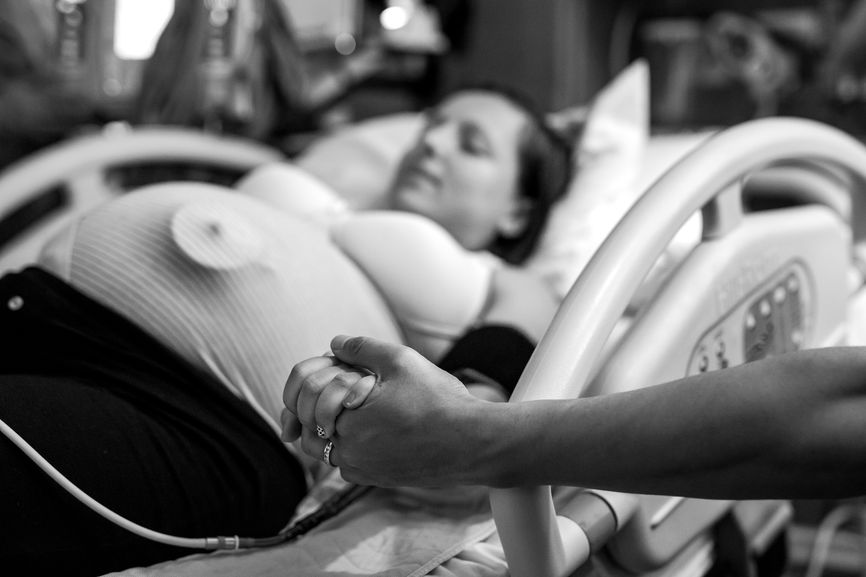
𐄂  Place your hand over her hand 

𐄂  Rub her back


People who suffer from anxiety are taught to focus on each of the five senses as a grounding technique. 

When focusing on each of the senses, the overwhelmed person is forced to be in the present moment 

and pay attention to things around them. You can use this same basic principle to help mom through 

labor, such as by playing music that helps her relax.. Find comforting sights, sounds, smells, tastes, and 

feelings to stimulate mom. Some examples include:


SIGHT

  • Look into her mother’s eyes
  • Dimmed lights
  • Show her pictures of loved ones or the ultrasound

SOUND

  • Favorite music
  • Nature sounds

SMELL 

  • Essential oils
  • Own pillows or blankets (scent reminds mother of home)
    • When it comes to scents, try to avoid anything too overpowering, especially if mom was sensitive to scents during pregnancy.

TASTE

  • Ice cubes
  • Lip balm

TOUCH

  • Water
  • Pressure


Other relaxation ideas to consider are:

  • Playing music that helps her relax
  • Reading to her
  • Rubbing her back
  • Suggesting a shower
  • Making sure she’s drinking water
  • Asking extra people to leave the room


#6: Don’t forget to take care of yourself 


Be sure to take plenty of deep breaths, stay hydrated, and have plenty of snacks on deck so you stay 

fueled throughout labor.  Make sure that mom can fully focus on labor and delivery because she knows 

you’re taking care of you. Here’s a cheat sheet that can help you help the mom-to-be in the delivery room! 


Like this piece? Subscribe to our monthly newsletter for real stories about women on their journey to motherhood.


Which sleep positions are safe during pregnancy?


Pregnancy is exhausting! Unfortunately, finding rest isn’t always so easy.  And while we each naturally have our favorite positions to sleep in, whether it’s on our back, on one of our sides, on our stomach, or spread out like a star, that a baby bump can make sleeping in certain positions less comfortable, or even less safe for you and baby. 


So what are some comfortable and safe pregnancy sleep positions?


After 15 weeks, avoid sleeping on your back


At around 15 to 20 weeks, your uterus will become big enough to constrict your blood flow. The inferior vena cava (IVC), or the vein that runs up the right-side vertebral column, carries deoxygenated blood from your lower body to your heart. When you sleep (or lay) on your back, your bump can apply enough pressure to make that process difficult. It can also potentially cut off blood supply to the placenta, making this one of the least safe pregnancy sleep positions. (It’s less dramatic, but think about when you step on a hose.) 


If you end up rolling onto your back in your sleep and lay there for too long, you might wake up out of breath, or as if your heart is racing. But if you’re a natural back sleeper and find yourself continuously waking up on your back, don’t worry! Your body is telling you it’s time to roll over. So when you wake up, just roll to your side. Eventually, your body will get used to sleeping that way. You can also try a pregnancy pillow to make it harder to roll in your sleep. 


Avoid sleeping on your stomach, too 


Sleeping on your tummy is fine only for the first 16 to 18 weeks of your pregnancy. At that point, sleeping on your stomach poses some of the same risks as sleeping on your back. The good news is that it won’t be easy to roll over onto your tummy once your belly grows, so most moms-to-be won’t wind up in this position naturally once it’s late enough in their pregnancy to pose a risk. 


Sleeping on your side is the way to go! 


Sleeping on your side, especially your left side, is as safe as it gets while pregnant. This optimizes blood flow by getting all the weight off the right side of your uterus. Obviously, if you’ve been sleeping on anything other than your left side, it’s not like you’re just going to automatically start sleeping in another position. 


Why the left side? Some experts say that this helps increase the amount of blood and nutrients and avoids pressure on organs, like your liver. But the bottom line is that side-sleep is best, and either on the right or left is fine. 


Pregnancy body pillows make the transition all the easier. You can try out different sleeping positions as you move through pregnancy and your body changes, and what’s comfortable for one mama might not always be comfortable for you. If you’re experiencing hip or back pain while trying to sleep, you can slide that pillow between your legs and it should help alleviate some of that pain. 


Positioning tips for moms-to-be 


Researching safe pregnancy sleep positions is one thing, but actually trying to get comfortable in them is another. If you’re finding it difficult to get a full night’s rest while pregnant, here are a few tips: 


  • For more belly and back support: Try propping a pillow under your tummy and between your knees. The knee support is helpful for your general alignment: As relaxin surges through your body, you might find some pain in your hips and low back, and supporting them with a prop during sleep can certainly help


  • For shortness of breath: Put a pillow under your side to raise your chest a bit. 


  • For heartburn: Prop up the head of the bed a few inches with some books or blocks. This is similar to propping yourself up while sleeping, except it’s more permanent, ensuring the acid will be kept in your stomach rather than burning in your esophagus. 


  • Use lots of pillows: Try different combinations of pillow positions, or a variety of combinations at the same time, until you find one that works for you. It’s all about experimentation! 


Do what’s comfortable for you 


Ultimately, finding safe pregnancy sleep positions comes down to finding what’s most comfortable to you, as long as you aren’t lying on your back or stomach. If you find you just aren’t sleeping unless you can lie on your back, prop yourself up with some pillows at about a 45-degree angle. This safe pregnancy sleep position will take some pressure off your IVC and let you get some rest. As mentioned above, full-body pregnancy sleep pillows offer the support some moms-to-be need to really get comfy in bed. 


If you keep falling asleep on your left side and end up waking up in the middle of the night in other positions, don’t spend too much time worrying. You probably weren’t sleeping there for long. If your body is not getting proper blood flow, you’ll feel it pretty quickly. At that point, you can just readjust and catch some much-needed Z’s! 


Disclaimer: The information herein is not intended or implied to be a substitute for professional medical advice, diagnosis, or treatment.


Like this piece? Subscribe to our monthly newsletter for real stories about women on their journey to motherhood.


Parenting with a chronic illness


Once a week, I take my toddler to a music class 25 minutes from our house. It seems like a small thing, taking a two-year-old on a simple outing, but it triggers one of my biggest fears— being out with my child and unable to find a bathroom when I need it.


That might sound like a strange thing to worry about. After all, it’s usually the toddlers who have bathroom accidents, not the parents.


But I have a form of inflammatory bowel disease called ulcerative colitis. This means when my disease is active and I have to go, I have to go now. Having to find a bathroom at a moment’s notice is crucial and panic inducing, and having a little kid to wrangle at the same time adds an extra level of stress to normal activities.


I’ve worried about bathroom access for well over a decade now, before I was even diagnosed with this painful chronic disease. It started in high school and persisted throughout college, when I finally went to see a gastroenterologist and received a proper diagnosis. What I’d always brushed off as just lactose intolerance was actually a serious disorder.


Even though I was diagnosed 10 years ago, the only time I’ve been in full remission from my UC was when I was pregnant. According to my doctor, one-third of women go into remission during pregnancy, while another third see their condition stay the same, and the final third actually get worse. Not a single medication has helped me feel as healthy as I did then.


The relief was short-lived, though. My symptoms came back after my son was born, in early 2017, and for the last two years, I’ve been doing the dance of caring for him and for myself and trying to do both things well.


I still remember the first time I had to cut him off mid-nursing to set him in his bassinet so I could dash to the toilet. He was only a couple of months old and screamed at the top of his little lungs until I came back. It was the first time I ran from him to get to the bathroom in time, but not the last. He’s gotten so used to it now that he just follows me in there (because, toddlers).


Some days, we don’t leave the house because of my stomach. We rarely go out to eat (something my sweet husband has learned to shrug off, even though he would love it if we could try new restaurants together). We don’t go on outings that take us far from a restroom. Whenever I go somewhere, the first thing I do without even thinking about it is locate the toilets.


It hasn’t been easy parenting a small child while managing a stubborn disease, but I’m learning one important lesson in it all: extreme self-compassion.


I can be irrationally hard on myself, always wanting to be better in one way or another. But life with both a toddler and UC has shown me that surrendering is the only way to really be happy. I can fight against my reality when my kid is having a meltdown and I’m rushing to the bathroom, angry that I can’t just scoop him up and take him out somewhere fun—or I can accept things as they are and feel compassion for myself.


And not just placating or phony self-compassion, but a genuine sense of mercy and kindness. I started to think about what I’d say if a close friend had a small child and a health issue that made her feel lousy. I would never tell her to suck it up and get it together before she ruined her kid’s childhood by not leaving the house enough. I would never tell her she wasn’t trying hard enough to be well or make her wonder if everyone in her life thought she was just lazy. So why would I do that to myself?


It can be hard to give ourselves the same gentleness we so easily give to other people. We don’t think twice about comforting our friends, yet our own problems rarely elicit the same response.


My son is always watching, and I want him to see me making good decisions based on care rather than unnecessary pressure. So I show him that we go to our music class because it’s fun and we’re committed to it, but I also won’t hesitate to skip a week if I feel unwell. I show him that I can let myself be where I am, whether I feel great and want to take on the world one day or can barely get off the couch the next.

And truly, the gift of self-compassion is not just for me: it’s also for my child, so he can see that we treat one another and ourselves kindly and with love no matter what.


Like this piece? Subscribe to our monthly newsletter for real stories about women on their journey to motherhood.

Natural childbirth: The 411


At Motherfigure, we believe the best childbirth experience is whatever results in a healthy child and mother. There’s no “wrong” or “unnatural” way to give birth. For us, the most important thing is making sure mothers feel empowered during their birth experience. Rather than outcomes, then, it’s about ensuring women feel they understand what’s happening and included in the process. 


These days, natural childbirth has a lot of different meanings. For some women, natural childbirth means a vaginal delivery, and others want to avoid medical intervention, period. Some women want to avoid an epidural. 


As such, we encourage all new parents to take control of their childbirth experience. Whenever possible, customize your labor and delivery. Consider health factors (for you and your baby), personal preferences, and belief systems as you explore your birthing options. With enough research and planning, the perfect birthing experience is waiting for you.


Some women do have strong preferences. If you’re interested in a natural childbirth, here are a few things to consider to facilitate a natural childbirth.

Find a doula


First, we recommend finding a doula. Doulas are professional “childbirth coaches” who guide expectant mothers through many of the emotional and physical aspects of pregnancy. Some doulas focus specifically on labor, while others provide assistance throughout your pregnancy. 


Doulas are a valuable resource, often possessing expert knowledge of holistic pain medication, birth strategies, and different natural childbirth methods. An experienced doula can help you and your partner understand all your birthing options. With your doula’s guidance, you’ll be able to plan the perfect birthing experience for you and your family.


So how do you find a doula? Using an online community like Motherfigure, you’ll be able to find the best doulas in your region. Ask for recommendations from other new parents and do your homework. 


Once you have a few potential candidates, make a list of questions and interview them. Look for a doula who communicates clearly, shares your personal values, and understands your needs. It’s also okay to ask the doula to provide references from past clients.


When you find the right doula, they can help you go over your options for natural childbirth.


Explore ways to manage pain and stress


Staying calm helps labor continue to progress. Although every woman is different, we’ve found that the below tips are good ways to manage pain and stress: 


  • Remember your contractions have a purpose. Try not to dread the next one coming
  • Stay mobile! 
  • Apply counterpressure during the contractions
  • Keep breathing
  • Try water, either in the shower or a tub (if available)
  • See if a TENS device helps


Next, create an environment that will work well for you. Some parents-to-be like the peace of mind provided by giving birth in a hospital, while others find that a home birth is less anxiety-inducing. Still others may decide that a hospital and doula combination is the best of both worlds. What matters most is finding an environment you feel most comfortable in, and that you understand your choice. Some of your options include: 


  • Birthing center: A birthing center is a special facility dedicated to childbirth, usually staffed by trained nurse midwives. Birthing centers are less “clinical” than a hospital and designed to create a warm, welcoming environment for mothers and babies. These facilities approach pregnancy and childbirth as beautiful life events, whereas some hospital maternity wards treat them as medical procedures. At a birthing center, you’ll be given more options for an unmedicated birth and alternative pain relief. Care tends to be more personalized, as well. For some mothers, a birthing center is the perfect middle ground between a hospital birth and a home birth.


  • Home birth: As the name implies, home birth is when you give birth to your child at home. Home births are usually attended by your doula, as well as a trained midwife who can bring all the necessary medical supplies. Giving birth in your home means you have complete control over the environment. You won’t be restricted by hospital rules so you can change positions during labor, shower, and eat or drink. Your natural childbirth can also be attended by more relatives and loved ones, but the cost can be high. Since insurance may not cover a home birth, you may be expected to pay up to $5,000 out of pocket for the experience Plus, with a home birth, medical attention isn’t always close within reach, which is why working with a certified midwife and preparing for the unexpected is so important.


  • Water birth: A water birth is a delivery method where mothers are submerged in a special birthing tub. Usually occurring at a birthing center or under the guidance of a midwife at home, a water birth provides comfort during contractions and can create a more soothing environment. 


Some believe that water birth is also a gentler transition for the baby because he or she has been immersed in amniotic fluid for nine months, but it does come with its own set of risks, including infection and drowning

Keep your options open


As you plan your natural childbirth, remember to expect the unexpected. Pregnancy is full of change and potential complications. Always do whatever is best for you and your baby. There’s no shame in altering your birth plans at the last minute. 


After all, there may be medical reasons that make so-called natural childbirth methods too risky or outright impossible. Some women may choose to have an unmedicated pregnancy yet still require an epidural or even a last-minute cesarean. Your childbirth plan should empower you to make whatever decision is right for you and your family in that moment.


So keep your options open! And, as always, consult your doctor or licensed healthcare provider before making any medical decisions. 

Learn more about natural childbirth at Motherfigure


For more information about alternative childbirth experiences, visit Motherfigure! Motherfigure is a safe space for all pregnant women and new mothers. Learn more about finding a doula, compare different birthing techniques, and read what other moms have to say about natural childbirth.


Like this piece? Subscribe to our monthly newsletter for real stories about women on their journey to motherhood.

The motherhood marathon


I laced up my Nikes, hoping the calm of routine would banish the butterflies in my stomach. Or was that my unborn child giving me a pre-race pep rally? Too close to call, but either way, I concentrated on the creeping morning light, illuminating thousands of nutcases just like me gathered around a starting line.


people running on road during daytime


Just one small difference, I gulped. Probably none of these runners getting ready to run 26.2 miles are also getting ready to give birth.                                       


I hadn’t planned it this way — not the running, not the racing, not the pregnancy, not the timing. It had all kind of happened accidentally, as most major decisions in my life seem to.


Years earlier, I had naively figured I could conquer the world by jotting down some goals. “Run a marathon” made the list, because it sounded cool and I had been born in the birthplace of Nike. Pretty much everyone in Eugene, Ore., runs for fun; why not me? So after graduating college, I signed up for my first-ever race: a marathon.


Everything was going swimmingly in my pre-race training — and given that I had always had issues with urinary incontinence during exercise, the phrase was sometimes more literal than figurative. I had grown up crossing my legs for every sneeze, wearing black for P.E. classes and mastering the artful turn after a high kick in cheerleading. My mom joked that it was our genetic lot and part of becoming a woman. “Just wait until you have kids!” she’d say. As a farm girl, I had watched more than one bovine uterus prolapse, so I wasn’t particularly looking forward to following in my mom’s sometimes-wet footsteps.


Then came my 22nd birthday and the positive pregnancy test. In between the bouts of crying, I realized that my marathon was six weeks away, meaning I would be almost in my second trimester on race day.


A resolve knit itself together inside me. If pioneer women could cross the country on the Oregon Trail while carrying an unborn child, I thought, then my baby and I can run a few dozen miles with aid stations and an afterparty.


Once I got the medical OK, it was all systems go (including, of course, my bladder). I would wake up before work and run 15 miles, stopping every so often to hurl and pointlessly dry myself on the side of the road. The high mileage seemed to help, giving me something to think about besides my terrible morning sickness.


When that official starting gun went off, my body took over, giving a taste of what was to come that fall. I listened closely to what it was telling me, walking when I needed to, running again when some invisible voice commanded. As the miles passed, I visualized my son giving me a high five: “We’re doing it, Mommy! Great job!” And when they placed the finisher’s medal around my neck, I felt deep in my gut that motherhood would be, like the marathon, hard yet immensely worth it.


My husband and I announced our impending parenthood that night. “You did what while carrying my grandbaby?!” my mom asked incredulously. Even so, I could see the corners of her mouth curl into a grin. I didn’t need to remind her that she had taught aerobics classes until labor with all four of her children.


That first birth, though, went terribly, leaving me with third-degree tearing after an episiotomy, as well as a two-finger-wide diastasis split in my abdomen. The next year was spent in constant physical pain; I couldn’t even transition from sitting to standing without wincing and weeing.


How could I have gone from a marathon runner to an old woman so quickly?


Thankfully, we moved to another state, and when I got pregnant again, midwives and doulas worked with me. They sent me to women’s pelvic dysfunction therapy, something I didn’t even realize existed. I subscribed to a holistic postpartum fitness website that slowly wove my body back together. And I kept running, announcing my second son at the finish line of a half marathon, this time on purpose. On his due date, I ran (translation: waddled) a 10K for kicks.


I figured it would be my tradition, a way to keep everyone guessing every time I signed up for a race. But running also became a way for me to prove to myself that I could do hard things with children in tow.


One day, I realized that I was no longer leaking. The therapy, the vaginal birth, the tummy-safe fitness, the running—it had all worked! My body was stronger with children than it had been without. This felt so great that my partner and I created another babe; I informed the world about my arriving daughter well into our second trimester at another half marathon. This time, no one batted an eyelash at my weird announcement method. And when my girl and I ran a 28-minute 5K at eight months along, I relished the looks on the other runners’ faces as I passed them.


My children and I were born to move mountains. It’s not always pretty, or dry (so many bodily fluids!). But it’s our race, our journey together. We will be each other’s aid stations as the years rack up, the medical tent when it hurts too bad, the cheering spectators on the sidelines.


And when one of us wants to quit, we can point to our joint finisher’s medals, clasp hands, and cross another finish line together.


Like this piece? Subscribe to our monthly newsletter for real stories about women on their journey to motherhood

Mastitis breastfeeding: How to deal with mastitis while breastfeeding


Mastitis is a common but extremely painful type of inflammation of and infection in the breast. Although it can affect anyone with breasts (even men!), mastitis usually occurs in new mothers within the first six months of starting lactation. Due to mastitis, breastfeeding can become very painful and even more difficult. Some women even have to wean earlier than they’d like because of mastitis. 


If you’re wondering how to deal with mastitis while breastfeeding—or how to identify whether you might have mastitis in the first place—here are some common considerations. Take heart: If you’re suffering from mastitis while breastfeeding, there are many treatment options to give you relief from mastitis, from antibiotics to home remedies. And if the pain is too much, that’s OK, too. Fed is best. 


Causes and common symptoms of mastitis


First, let’s review the common symptoms of mastitis. Signs of mastitis while breastfeeding can occur suddenly and include a range of symptoms. Every woman’s body is unique, so mastitis can present in different ways.  If you think you have mastitis, you likely have a plugged duct, at the very least. It’s important to take action as soon as possible, as mastitis is often caused by plugged ducts that go untreated. Here are the most common signs and symptoms of mastitis:


  • Burning sensation when lactating
  • General breast soreness or swelling
  • Hard lump / duct in the breast
  • Rash on the breast
  • Breasts can be tender, painful, and warm to the touch
  • Flu-like symptoms: feeling lethargic and experiencing body aches or chills
  • Fever of 101 degrees or higher


What causes mastitis? For most nursing mothers, it starts with a plugged duct. This can happen if your breast is not completely emptied after a nursing session (which is why women with hypogalatia are at a higher risk). It’s counterintuitive, but this gets built up, which results in a blockage. When the milk “backs up,” it results in inflammation. If you don’t act quickly, that plugged duct can get inflamed and infected, which is what we refer to when we talk about mastitis.  


Mastitis can also occur when certain harmful bacteria enter the breast. Bacteria carried from your skin or the baby’s mouth can enter your breast through the nipple or cracks in your skin. When the breast isn’t empty, the “stagnant” milk can become a breeding ground for this bacteria.

How to diagnose mastitis while breastfeeding


If you think you may have mastitis, see your doctor or other healthcare provider. Mastitis is usually diagnosed based on the signs listed above, especially that fever or redness. Your doctor will typically examine the breast inflammation and ask about your symptoms. In particular, they will look for a red, wedge-shaped area on the breast that points toward the nipple. This specific pattern is a dead giveaway for mastitis. Once diagnosed, your doctor can prescribe an antibiotic. 


In *very* rare cases, doctors may order additional tests, such as a biopsy, to rule out breast abscesses or cancer. However, diagnosing mastitis while breastfeeding is usually a standard, easy process. 


If you don’t want to see your provider—or, let’s face it, if you can’t—there are several at-home treatment options for mastitis.

Mastitis treatment and relief


As soon as you feel a plugged duct, start applying warm, moist heat. Take a bath or put some warm washcloths on the affected area. Also, it’s going to hurt, but nurse or pump from the affected breast as much as you possibly can. You need to drain that bad boy. We’ll get to it a little later, but your lactation consultant can help with this! 


Breastfeeding while you have mastitis won’t harm your baby. It may be extra painful, but breastfeeding will help you recover by clearing milk from your ducts and ensuring a regular flow. Breastfeeding can be more effective at unclogging the duct than your pump might be, but do whatever works best for you.


For relieving pain and flu-like symptoms, you can take over-the-counter medications. The best NSAID to take while nursing is Advil or Motrin because the amount transferred to your baby is very low. If you’re no longer breastfeeding, your doctor may also prescribe antibiotics to clear the infection. 


Some also swear by applying cold cabbage leaves to the breast to help with inflammation and engorgement. But cabbage can also ultimately limit your milk supply, so proceed with caution with this treatment, and consider talking to your lactation consultant about it. 


It’s important to make sure you get plenty of rest when suffering from mastitis. Although it can be a challenge to find time for yourself when caring for a new baby, your body needs to slow down and heal. You know that advice to sleep when baby does? We mean it now. Drink plenty of water and wear comfortable, loose-fitting bras.

Talk to a lactation consultant


We also recommend talking to a lactation consultant about mastitis. A lactation consultant can help in a variety of ways. They’ll be able to assist with home remedies for pain relief, give you tips to avoid mastitis in the future, and even help you heal from your current inflammation via hand expressing. 


Your lactation consultant can show you how to hand express, which involves gently squeezing or kneading the breast to encourage lactation. In some cases, your lactation consultant may even hand express for you in order to provide faster mastitis relief.

Mastitis prevention


Finally, one of the best ways to deal with mastitis while breastfeeding is to prevent inflammation from occurring to begin with. You may not always be able to prevent mastitis, but there are steps you can take to drastically reduce the risk.


First, wear light, loose-fitting bras and clothing to avoid putting too much pressure on your breasts. Tight clothing can restrict blood flow. Then, make sure your baby attaches correctly when breastfeeding and empty each breast completely. You may wish to hand express or pump after nursing, even when your baby is full. Your lactation consultant can help with this.


With this information, you can deal with mastitis and make your breastfeeding journey easier.


Like this piece? Subscribe to our monthly newsletter for real stories about women on their journey to motherhood.